Practice and Pain

Today I climbed up  Daigozan, the hill behind the famous Daigoji-Temple outside Kyoto. It is a place of importance also for the Yamabushi, the ascetic mountain hermits. Their exercise is extremely hard, the Yamabushi dedicated themselves to walking long distance every night in the mountains and pray, for several years.

While climbing and sweating and catching for breath, I wondered, if all “real” or “efficient” exercise has to be painful at some point, and why?

For sure, if you always stay safely within your comfort zone, physically and emotionally, you cannot progress. You just stay where you are, and who you are. Only leaving this zone stimulates your body and soul to change!

We all know from sports, if the heartbeat does not go up, there is no stimulus for the body to adapt to higher demands. If we do not use our brain, the neurons re-organise, and we will loose our intellectual ability.

So, I thought while still climbing, the pain is no purpose on its own when practicing, it is just a signal from our body or soul, that a change is requested (and will for sure happen). No need to fear or avoid a certain healthy level of it …

Does this ask for a fierce and strict teacher then? I hope not!

I believe, if painful exercise is forced upon you, it can cause severe damage! The motivation to reach out beyond your current limits comes from inside yourself, it is your intrinsic motivation, which might well let you accept the pain and tiredness coming along with the joy of intense practice. But there is no you must from the outside!

Your Zen-teacher is maybe just an example, someone who might help you to discover your own intrinsic motivation. For sure, he himself went through all this pain to a certain degree, and that is why he is as he is. And hopefully he protects you from doing too much, when super-motivation drives you beyond healthy limits of exhaustion.

daigosan

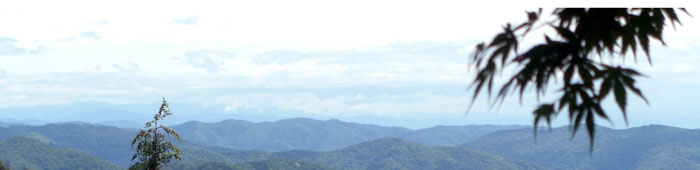
The view from the top of Daigozan is just great! It was worth all the efforts … but the more dangerous part of a mountain tour is always descending, not climbing up!

Affiliation with Shunkoin-Temple

Shunko-in (Myoshinji) / Kyoto

Shunko-in (Myoshinji) / Kyoto

Around last year, by accident, I discovered Shunkoin, and visited it the next morning for Zazen. Shunkoin is a beautiful Rinzai-Zen Temple inside the big Myoshinji Temple area in the West of Kyoto. It has a very interesting and long history, and it is very open for foreigners who want to experience Zazen!

Today I went there once more, for Zazen, and to speak with the deputy head priest Rev. Taka Kawakami.

My last year’s very positive impression was confirmed during my visit today, Shunkoin is really a place open for western lay-people to experience Zazen without any fear or prejudice. I very much like the friendly and open attitude of Rev. Kawakami!

The Doraku-An Zen-Dojo is now Shunkoin Temple’s official association in Germany. I am very grateful to Rev. Kawakami for his support!

A Journey to the North

This time I visit Japan to meet and support friends and colleagues, especially those in Sendai (which was severely hit by the Great East Japan Earthquake on March 11, 2011). It is my 23rd visit to Japan, but the first one I planned with pity and sorrows, instead of joyful and happy anticipation!

My journey started in Kyoto today, with a few days of rest coming, and then it will go up north.

Besides seeing my fellow Japanese researchers, I hope to find inspirations and ideas for my new Zen-Dojo in Kinzweiler (near Aachen, Germany).

Although Zen-temples are easy to find and to visit as a tourist, a direct contact or participation at Zazen is usually much more complicated, and often requires some knowledge of the Japanese language. I still vividly remember my first attempt going to the Gyoten (sunrise) Zazenkai at Engakuji in Kita-Kamakura about eleven years ago.

All announcement was written in Japanese (I could not read back then). So I phoned the temple the afternoon before, and with lots of repetition and back and forth, eventually I half-way understood where and when to go. Still, it was a real adventure, and I was much afraid “to do something wrong”.

Things changed a bit for the good during the past couple of years, and there are more and more places which welcome foreigners nowadays.