Licensed Pilots, and other Things

When I’m boarding a plane, I trust the pilot had a proper education and passed all examinations required for getting his license. I trust it’s not just his wishful thinking he can fly, and we all will find out he was wrong just seconds before dying.

Said that, I believe it is no good idea to transfer the “license concept” to all areas of life. Too much can not be licensed. For sure, most people would not prefer cooking a “licensed dish”, listening to “licensed music”, spending time with “licensed friends” or sharing their life with a “licensed partner”, instead of their favourite and cherished ones. We trust our taste, our brain or our feeling to make our choice. Asking for a license is nothing less than dedicating my own responsibility to a licensing authority, in a situation where I believe that I do not have the ability to judge with my own senses. Concerning pilots and bus drivers, this usually is a good and working concept … but what about your Zen or Budo teacher?

Delegating your responsibility to find out if your teacher is good for you or not can have very severe consequences … wasting years of your life with a person who got his shiny title for political reasons and/or money, or from an organisation he founded himself with his buddies, is by far not the worst what can happen!

Some good teachers I met had high ranks and titles, others didn’t. Some bad teachers I met also had high ranks and titles, others didn’t. It is meaningless … if rice fills your stomach well, don’t go for the carrots, just because they are “licensed”. You can find out yourself what is good for you, the best person to judge the qualification of your teacher is you! Make sure not to mix up entering a Dojo with boarding a plane …

P.S.: In case you or I do have some licenses and titles, never mind!
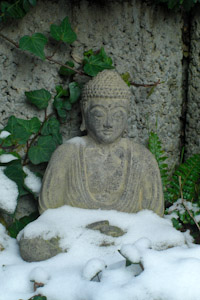
What is this telling us …?

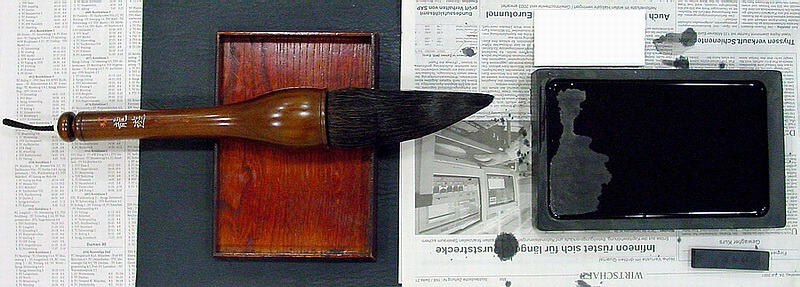
In China and Japan there is a long tradition of writing calligraphy, Chinese characters artistically brought to paper with brush and ink. I consider it fascinating how many non-Asians I have met have strong feelings and associations with a certain piece of calligraphy.

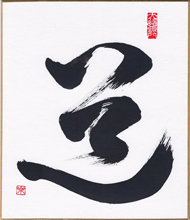
DO (道) - Way

DO (道) – Way

Occasionally, I write “custom made” pieces, and the process of finding suitable characters, deciding the style and eventually discussing the result is always most interesting. Someone who usually cannot “read” and “understand” a single character, never used a brush on his own, and without experience on judging “balance” or “quality of a stroke” makes highly accurate comments on my writings, sometimes pointing out weaknesses or strong points I have not realised myself. And always has a clear feeling about “like” or “dislike”, which more often than not matches my own view of my artwork.

I believe there is “something” about Zen-Calligraphy, which directly speaks to the viewer’s heart, transcending all culture- or language barriers. When writing with all your heart, you completely expose yourself, and this can be clearly seen in the brush-strokes you leave on the paper. A trace full of energy, or “full of emptiness”, appealing to everyone with open eyes …

A Christmas Carol

Nothing wrong with reciting Charles Dickens’ novella, like last year, and the year before, and the year before last year … just in case some of my blog’s Zen-inspired readers are looking for something new for this year’s Christmas, let me recommend “Before the Law” (Vor dem Gesetz) by Franz Kafka.

As a young Zen student, I heard from my seniors things like “it is impossible for us to master Zen”, “only the Chinese and Japanese Monks of past periods had a chance to achieve understanding”, or “you must give up everything” for living a Zen-life.

Well, yes, never mind … all these words are the words of the gatekeeper in Kafka’s parable, and after reading it, you know that his only purpose is to guard the gate dedicated for you to enter. Don’t waste your time listening to his words, or start counting the flees in his coat … just enter, straight away, or leave and let him and The Law alone … it might anyway not be what you are looking for!

I wonder if Kafka was aware of Mumon Ekai’s Mumonkan? For sure, he is a much misunderstood Western Zen-writer …

Taking it Serious

Since my early childhood time, I love the Danish fairy tail “The Emperor’s New Clothes” by Hans Christian Andersen. It is one of the best introductory texts to Zen I am aware of.

Looking right into the essence of a human being, in complete ignorance of whatever status, rank, title or other kind of fake cloths the person is believing or believed to wear, this is what we can learn in Zen. One might think a PhD or a 7th Dan in martial arts or a Roshi’s title is of some meaning, and the person holding it might be of a certain importance.

“Kill it!” was Rinzai’s response to any of this, and my (maybe more 21st century human and modest) reaction is “burst into laughter”. Zen is right here right now, the two or three of us. On a seminar day, you come through the door, put off your shoes, walk up the stairs … that’s all, in all it’s beauty and simplicity, nothing more, nothing less.

"Sensei"

Kobayashi Hirokazu

Kobayashi Hirokazu

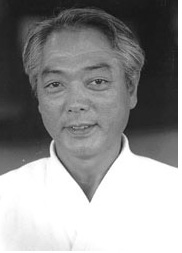
Last weekend, I went to an Aikido Seminar conducted by senior students of the late Kobayashi Hirokazu (1929-1998). It was touching to experience how much all of us who once practised with Kobayashi Sensei, in spite of our too obvious differences, carry him and his Aikido in our heart and body, share a love for the old man we simply refer to as “Sensei”.

I remember his teaching as generous, his technique efficient yet beautiful to watch, and personally he behaved just like an elder friend to us. There was no organisation to join, no examination to pass and no discussion about ranks and positions. Just practice, practice, practice, his friendly guidance and a good deal of joyful private communication outside class. What he left behind are the many of us, who most of all wish to understand and continue his way of doing Aikido.

Next year I will find a place to teach Kobayashi Sensei’s Aikido again, as I did more than a decade ago. The past 13 years I could not take responsibility for regular classes, since I was completing studies with my former Zen teacher. Now it’s the time, and I am much looking forward towards merging Aikido, Zazen and Hitsuzendo within one school …

Nice People Coming

When I was a young Zen student assisting my former teacher during his Sesshin, I often asked myself “why on earth do I spend my time and money to work with those people ?” Some participants in our seminars really got on my nerves, and often I felt I had more than enough good reasons to complain …

Shunryu Suzuki once said “when you have shit on your nose, it smells bad wherever you go”. In my experience, practising Zen is a bit like cleaning your nose. The bad smell you find everywhere is getting less and less with time …

Nowadays, I really enjoy doing seminars and Sesshin. There is no stress and no anger about participants, I am always looking forward towards having a good time of Zazen and Hitsuzendo with the nice people coming. I very much hope, after they leave, they don’t think it smelled bad at my Dojo!

A Journey to the East

Last evening I returned from a three weeks journey to China and Japan. This time I decided not to post anything during the trip, but instead take notes, and do the on-line work by and by once I am back home.

"Buddha's Light" written by an old man with a water-brush on the floor (Summer Palace/Beijing).

“Buddha’s Light” written by an old man with a water-brush on the floor (Summer Palace/Beijing).

Besides meeting friends and family, the purpose of my trip was to deeper understand the roots of Chinese and Japanese calligraphy. Also, I wanted to explore how much of the once so rich Chinese culture survived the cultural revolution and the past decade’s vast economic and industrial changes.

In Japan, I visited Shunkoin, the Rinzai-Zen temple within Myoshinji in Kyoto, my Dojo is affiliated with.

To keep the time-line of the blog in order, I will set the posting dates approximately to the days I took my notes. So please scroll down, if you want to read my Chinese-Japanese Zen diary coming on-line by and by during the next week.

Fukushima Happy Design

I started this blog in May 2011 during my visit to Japan, soon after the Great East Japan Earthquake. Coming back six months later, Kyoto and Tokyo appeared to me as they did during all my previous trips. No more “energy saving” posters, none of the millions of cooled vending machines switched off, and the night in Shibuya was illuminated brighter than daylight.

fukushima-1In Asakusa, besides the Sensoji temple, I saw an exhibition from the Fukushima region, with kabuki play, a soba noodle maker, lots of tourist advertisement and regional farming products and sake freely distributed and happily taken away by the visitors. The slogan of the event was “Fukushima Happy Design”.

I do so much appreciate the strength of the Japanese people not to bother others publicly with private troubles and emotions … but in the face of a disaster which has its causes, people and institutions responsible for it, and the possibility to re-occur, I felt so sad amongst the Fukushima locals, who see no other way than trying hard to keep on going as if nothing happened.

“Fukushima has been a place to bring you happiness. It’s not changed until now” one can read on the “Fukushima Happy Design” facebook page. I hope a change will come, for Fukushima and for the world. Let’s work together, that it will become more than just a happy new design …

P.S.: I have been asked about “Zen and politics”, if it would not be better for Zen-people to stay away from these topics, sit on the pillow and have no opinion on politics. Zen is politics, Zen is revolution. Human beings with a free and independent mind, taking responsibility for each other, not drawing artificial boarders between “me” and “them”, “me” and “the nature” or “me” and “the rest of the world”, this is Zen.

An old Calligrapher

calligrapher-1In the park of the Summer Palace in Beijing I witnessed and old man writing beautiful calligraphy with a sponge-like brush on the floor. He seemed not to be the slightest bit irritated by the noisy people around him, and when we asked him later, he told us that he was just spending some time while waiting for a friend.

The old man beautifully wrote an ancient poem, a citation of Mao and the words “Spreading Buddha’s Light in all World”.

I once read that calligraphers will experience enlightenment after many many years of practise, even when they never practise any Zen. This old man seemed to have integrated in his writing all his and his ancestors past experiences.

Fellows

calligrapher-1-2“During culture revolution, you’d be in jail for talking to that foreigner”, the calligrapher’s friend said, while we had some good fun writing with the water brush for each other.

After surviving such horrible past, how could this old man preserve his open heart, joking with me all the time while practising our art?

He has been exercising for almost 30 years, we learned. Doing calligraphy, I am convinced, can help one to develop more than just a beautiful handwriting …