Too many Spokes

I know several fine Zen practitioners who probably have only a vague idea (if at all) what could be meant by the Four Noble Truths, the Eightfold Path, not to mention any of the canonical texts or Sutras. They are content with their practice, joyful community members and their helpful hand usually finished a task before others discover there might be some work to do. I just want to live with them …

I’ve encountered others who got an upset brain from trying to digest too many spoiled translations of the old classics. These people often sound like a living encyclopaedia of misunderstandings, and at times display an irritating amount of pride about the accumulated confusion inside their heads. Investigating the source of a potential mistranslation of an old text is quickly mistaken by these faithful yet pitiable believers as an attempt to break through their firmly masoned walls of misconceptions protecting a castle of religious adopted creed they inhabit. Not the kind of people I want to live with, though I’d welcome them at my Dojo …

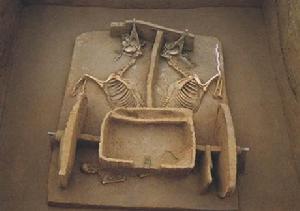
To experience how quick one can get lost in translation, let’s for example have a look at a piece from the Mumonkan (無門關), a collection of Zen dialogues compiled in the 13th century by Mumon Ekai (無門慧開). Case 8 tells us about a wagon fabricated by Keichu (the legendary Chinese craftsman) which is counting 100 spokes (dividing up into 50 spokes per wheel for the at his time common two-wheel model).

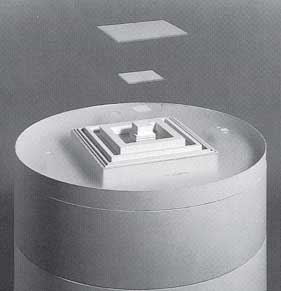
Keichu's wagon excarvated

Keichu’s wagon excavated, can you see any spokes?

Doesn’t this sound like a ridiculous number of spokes? Considering the Buddhist wheel (法輪) has just eight spokes, and the famous wheel mentioned in the Tao Te Ching (道德經) is satisfied with 30 spokes, yet making a point on not the spokes but the empty hub make the wheel functioning. For sure, this masterpiece of a wheel with 50 spokes, which (according to Mumon) when rotating even makes a master feel dizzy (機輪轉處/達者猶迷), it has far too many spokes!

You probably now can easily guess what this cleverly fabricated but unnecessary and potentially confusing bunch of spokes stands for, what you should best do with it and what you get after mission completed … we shall leave this little exercise to the reader.

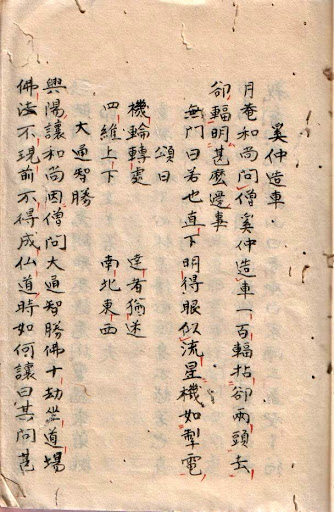
To get back to our topic, how is the ancient Chinese text (which in the original reads 奚仲造車一百輻) often translated? “Keichu made one hundred carts“. Well, he didn’t … and lost you get with all the speculations built on such mistranslation.

Original 13th century manuscript of the Mumonkan Case 8

Original 13th century manuscript of the Mumonkan Case 8

Scholarly Appendix: I assume this common misunderstanding is caused by mistakenly reading 輻 as an ancient classifier for counting carts, which is instead written (quite similar) as 輛. I was at first thrown off the scent by Chinese versions of the text which employed both characters in a bit random fashion, supporting the “one hundred carts” reading, yet I could not find any hint that the character 輻 has ever been used as a classifier for counting equivalent to 輛.

Could it be an erroneous reading from the ancient hand-written original? Until recently a 15th century Japanese woodblock print was considered the eldest version available, almost all English translations are based on it. After some research I found that around 2006 a much elder handwritten version was discovered, dating back to the 13th century. Alas, the Taipei based museum which once displayed a facsimile on-line ceased to exist, and it took me some precious time to find a copy in the depths of the world wide web. It very clearly reads 造車一百輻, no doubt is possible. So far, I guess we have good reason to believe Mumon talked of a wagon with hundred spokes, and not one hundred wagon.

I’d be most happy to hear comments by scholars of Classical Chinese on this very crucial point!

Pixelchaos

I stole the title for this post from a discussion in a Buddhist on-line forum I shared the other day. In a previous post I explained why I don’t like having public discussions with strangers on the web. And as I often do after forming an “opinion” on this or that, I go out and see if the opposite might not be true as well …

I read a lot in the forum for the past couple of days, posts from very educated people, kind and helpful messages, off-topic stuff and a lot of opinions on this or that. I saw the fires of greed, aversion and delusion burning high and passionately being fired in some threads. So far, “discussing with strangers on the web” was a better experience than expected, though the few things I contributed were occasionally misunderstood (and quickly clarified), and one exchange completely derailed …

What makes me consider to unsubscribe after my short visit is the time a sincere interaction requires. An interaction with a random selection of strangers I happen to meet on-line, whom I don’t know and who I most likely will never meet in person. Time is so precious … and carefully reading and answering the two active discussions I joined took so much of my time.

What makes me consider to not unsubscribe for the time being is feeling ever grateful for the positive experience I made with yet another online-forum several years ago, though just as a passive reader and learner.

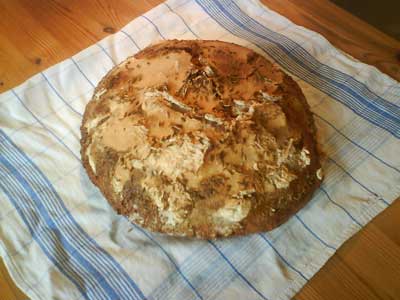
my first sour-dough bread, around 2007

my first sour-dough bread, baked in summer 2007

The eminently competent people there were never tired to share their experience concerning their ancient art in the most friendly way. They were particularly kind to beginners posting their troubles and failures, which occurred in spite of a sufficiently complete introduction section to the subject. And they had a very productive exchange going on amongst their experienced peers, including some professionals. These people seemed ever curious about learning something new, doing something old in a new or better way, though they clearly had distinct preferences in taste and style which could not differ more. All of them seemed to enjoy what they do, and their life in general. And they shared a common deep believe: you don’t need to add yeast to bake delicious bread. It was a forum on sour-dough baking … and I wonder ever since if baking bread turns someone into a joyful companion, or joyful people start baking bread.

Another idea I want to realise one day: teaching a seminar on “Zen and the Art of Sourdough Bread Baking”, it’s just waiting for the logistics to be sorted out …

Add on (Sep. 2014): While cleaning up my spam folder these days, I found several e-mail messages concerning discussions in the above mentioned Buddhist on-line forum I was participating for a few weeks around early spring. Not long after joining, I have to admit, I completely lost interest to exchange with people who take such little effort into maintaining a minimum politeness level when publicly communicating with strangers. I remember I sent a farewell-message to the friendly and always caring moderator, and did not log in ever since …

Was it a complete waste of time? I don’t think so. My short random walk in the twilight of the German speaking corner of the Buddhist world wide web helped me to much better understand why it is a really good idea to avoid idle chatter.

High Noon in the Sandbox

I received several questions why I do not enable commenting for my blog, if I want to avoid discussions about what I am writing here.

Well, no … I love discussions. But I restrict them to the group of people I either know, or I meet in person. I don’t like public discussions with strangers on the web for good reason. When I meet someone in person and enjoy polite small-talk while preparing a coup of tea for my guest, and he suddenly displays a weird expression on his face and starts shouting at me, I know what to do. Have a coup of tea (喫茶去).

The world wide web is a different story … it is a place where often sad and lonely people, who likely did not receive their share of invitations for a coup of tea, troll around shouting loudly. But we cannot see the weird expression on their faces until the mess is public, the insult written down for the world to read. Though I feel genuinely sorry for someone who has to spread his pain to others, my first ennobling truth is to keep some safety distance. Please have your cup of cyber-tea somewhere else!

Circles and Copies

kreis

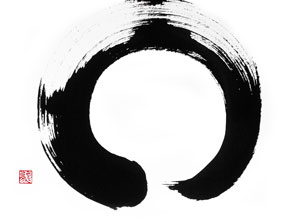
Smiley Enso I painted in 2001.

Last year I discovered on the web-page of some American Zen group a calligraphy I had painted and put on-line more than a decade ago. I felt half pleased they seemed to like my old sketch, half disappointed they didn’t ask me if it was o.k. to use it. I guess it’s something related to Buddhist percepts, but I might have to go back to their page to find a correct reference which number of which set of percepts is related to “take only what is given to you”. Anyway, I’m not greedy and usually happy if I can help with what I’m doing!

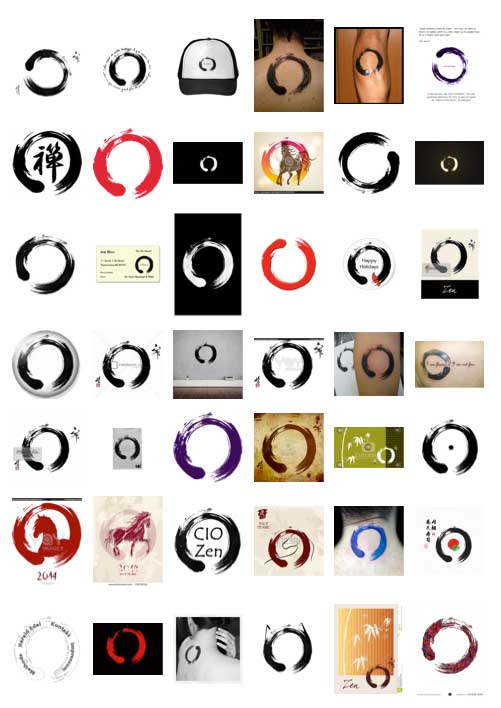
My former teacher, who makes a certain portion of his living by selling his extraordinary Zen-Artwork, had always been less pleased finding other people using his masterpieces without asking, giving credits and maybe an appropriate donation. Particularly his Enso or Zen circles became very popular copy&paste victims, which is partially my fault since I put some of them on-line on his web-page and gallery. Today you can find many unauthorised versions of his Enso on the web, on any kind of material from paper to skin, in all variations from a plain copy to rotated or coloured ones plus additional image or text (and usually with a new copyright notice).

Below just a random selection I found by google today:

enso_from_webLooking at this disgraceful collection, I feel genuinely sorry there is nothing more I can do for my former teacher. Though, considering the obvious popularity and demand for Zen circles, I had another idea:

My daughter initiated a cute local charity project before Christmas last year and collected a respectable amount of donations by that. I was honestly impressed and felt embarrassed I never thought about starting something similar myself. What can I do, but drawing empty circles? Maybe not as nice as my former teacher’s, but usually not completely bad either … I do it every day ever since I’ve first met him almost 15 years ago.

I’m thinking of a “charity deal”: you do a donation to whatever charity project you have in mind, and in return I will draw an Enso for you. You provide the material (and a stamped back-envelope), I do my daily Enso practice on whatever you sent me and send it back (including copyright transfer). Maybe you get an original hand-calligraphed Enso you’d like, and you can do with it whatever you want! Just an idea, I’ll think about it…

P.S.: Only in case you found “your” artwork displayed above: before complaining or considering to take me to court for copyright infringement, maybe you think for a moment of the modest old Japanese Zen monk who provided the basis for all that … and refund him properly for his efforts. Here is the web-page with the original Enso (including original copyright notice).

Buddha is Dead

This is no surprise. Mr.Gautama, whom we call “The Buddha” and who (if we believe the Pali Canon) preferred to call himself “Thathagata” (the one who is thus come/gone), peacefully passed away almost 2500 years ago.

From the old texts we can get the impression Mr.Gautama was an incredibly talented psychologist, who had a very deep understanding of the human condition, the pains and sufferings of every day life, which he found to be originated in greed, aversion and illusion.

Fortunately, Mr.Gautama was kind enough to share his experiences with lots of other people, so successfully that we can excavate and study his ideas even today, hundreds of generations after his death. The discourses we find in the old texts are direct, clear and eminently practical. So much, that lots of it can easily bridge the gap of 2500 years and continents and speak to us 21st century global citizens. And if we are lucky enough, we might even meet and study with someone who is living up to all this, and such spares us the effort to learn ancient north Indian dialects and work through thousands of pages of old text.

Why then did it become a religion, called Buddhism (a word most likely coined by 19th century Western scholars)? Why do we have Monks, Nuns, Priests, Temples and all that …?

The Indian society 2500 years ago was strictly organised in terms of social stratification. You were born into your cast, had a life-long obligation to follow your cast’s rules and rituals, merry within your cast and die as a member of your cast. No way to go on-line and browse a bit for “other religions”, no way to dream of  “I chose my own beliefs from now on”. Either you were in, one hundred percent committed, or you had to leave. Not just leave your cast, but also your home, your family, your social group, the town you were living in … and go to dwell in the forests.

This is what Mr.Gautama did, leaving home to live in the forest, and so were the people who became his initial audience: the out-casts of Indian society, living in the forests. They supported themselves by begging and sharing and had no significant possession  … Mr.Gautamas attempts of getting this bunch of people around him a bit more organised ended up 2500 years later with priests living in luxurious temples wearing brocade robes and making a living by performing funeral services (and occasionally handing down enlightenment certificates). And most recently it lead to an increasing number of Westerners who attempt to integrate a more or less authentic copy&paste version of all this into their daily life as a school teacher, scientist, lawyer or Christian priest.

But aren’t we lucky today, compared to a 2500 years ago Indian who was unhappy with the destiny he or she was born into, who’s only chance was to stay and obey or escape into the forests? We are free to chose our beliefs and way of life, we have free access to an enormous amount of any kind of information and teaching, and usually we have enough spare time every day to study and practise (if we cut down a bit watching TV or working overtime). No need to leave a repressive family, home, social group and society to live in the forest in order to find and go our way!

Isn’t that an excellent perspective? We can just do it! Right here, right now …

Maybe it is this total freedom we did not yet learn to really appreciate, which makes us instead try to import some rules made for ancient Indian people who had to live in the forests – or robes, ranks, titles and rituals employed by professional funeral parlours in modern society Japan? Instead of just freely studying and living Mr.Gautamas insights … what a pity!

Transfer Complete!

I started this blog as a kind of travel diary when visiting Japan a few weeks after the Tohoku earthquake and tsunami in 2011. Later it became my major place to publish thoughts and experiences from teaching Zazen, Hitsuzendo (Zen-Calligraphy) and Aikiken (Aikido exercise with a wooden sword).

Now this blog exists for almost three years, and for various reasons I decided to move it away from it’s original blogspot location to a self-hosted wordpress platform. That transfer, which just completed today, was more work than it might sound (and much more than I originally expected!). I had to read through and fix links and formatting for each of the 164 articles (including images), which gave me lots of opportunity and time to think about impermanence.

Does it make sense at all to publicly preserve words and ideas from past years? Several things I wouldn’t say the same way today as I wrote them down a year or two ago. Much of the content is already out of date, and some topics are repeated several times in a slightly different fashion. Like everyone and everything, I am changing over time and my teaching is changing with me … why then save past words on-line? I kind of fancy the idea of keeping only a few most recent posts and delete all the older stuff, or at least I want to attach a “best before” warning to every post …

Painful Bias

In the introduction to my seminars and Sesshin I usually speak about certain misconceptions of Zen which obstruct a healthy and fruitful practise. Beginners, and often even advanced students, bring along a rucksack filled with a painful set of prejudices concerning Zazen, which, if not put down, can cause them a tremendous emotional and physical pain.

The most severe bias I encountered through years of teaching are:

  • Zazen and Zen practise in general is good for nothing!
  • You must stop thinking!
  • You must endure and sit through any pain!

and sometimes

  • You must not question your teacher!

Let me discuss one by one:

Zazen and Zen practise in general is good for nothing? Often one can read in Zen-related texts that Zen has no goal, we must not strive for any effect or outcome through our Zen practise, Zen is good for nothing and so on and so forth. Is it now wrong when I begin Zazen in the hope to change my life, myself for the better? Not at all! Without a strong desire to change, to develop and leave the probably painful cycles of my current life I would most likely not start doing Zen. A regular healthy practise with a qualified teacher will have some very positive effect on your life for sure, and a strong confidence in a positive outcome is necessary to keep up a good practise!

The warning “Zen is good for nothing” addresses the frequent misunderstanding that Zen practise will give you some additional super-magic qualities you can add to your otherwise unchanged life, just another skill providing extra power you can use to boost your career as a martial artist or manager. And of course a few hours or week-ends spent on your pillow will most likely not show any lasting effect, especially if you are distracted from your practise by anticipating and eagerly observing any expected outcome.

You must stop thinking? How should we human beings possibly stop thinking, and why? Without thinking we’d never come to read such a text, not to speak of all the arrangements necessary to participate a seminar. Thinking is essential to maintain our life, and especially starting any new practise comes along with a lot of extra thinking. It would be a horrible misunderstanding for a beginner of Zen to force yourself to stop thinking, and probably get angry about the fruitless effort to do so.

To a “stop thinking” I want to add “all the time!”. Our super fast intellectual planning ahead all eventualities mind does not have to run on 100% all the time. During Zazen we may allow ourselves to let it go in a gentle way and leave our thoughts and thinking what they are, just thoughts. Once they come up, we cannot stop them. But we can let them come and go without following them, without allowing them interfere with our concentration on a proper posture and deep breathing

You must endure and sit through any pain? Pain is not the purpose of Zazen, and enduring pain has no benefit. Pain does not allow me to concentrate well, in the worst case it indicates my body is experiencing some damage. My advise for beginners is to avoid pain, and more experienced students to carefully examine it.

When I know myself, my body well I realise it is often not pain, it is just a slightly unpleasant feeling. And when our mind has nothing else to do, we amplify and over-exaggerate it until it becomes mentally unbearable. Ever experienced the pain is gone when the end-of-meditation bell rings? Even before relieving from a painful posture? That was the extra pain we add to our slight physical discomfort. Not to add extra mental pain to our physical pain, by this relieving and enduring the physical pain is meant by “enduring pain”. If it really hurts, please change your posture!

You must not question your teacher? All the good teachers I studied with encouraged their students to question a lot. If your teacher does not allow questions, better don’t ask … leave him or her alone and find a new teacher!

Depending on the cultural background of your teacher, of course it is polite to find a proper timing when to ask. Sometimes a beginner is too keen to show off and fire a half understood prejudice at the teacher even before he or she had a chance to begin with the most basic lesson (which might be to make you clean the Dojo). Once you decided to trust your teacher, I recommend a willingness to do without hesitation. And at the same time, while you do, fundamentally questioning your and his or her doing. Why? Why? Why? Not just copy, dig as deep as you can, see if you can get deeper than your teacher’s and his teacher’s and his teacher’s teachers’ roots …

Praying to that Doll?

Today is the 8th day of the 12th month of the lunar calendar, the day on which we celebrate the Buddha experienced his “ah, that’s me!” after sitting for seven days under a tree, some 2500 years ago.

daibutsu (1 von 1)When my daughter was little, she once saw me bowing to a small Buddha statue at home and asked “papa, are you praying to that doll?”.

I replied that this doll is how we imagine a person might have looked like who lived very long long time ago in far away India. And that this person understood how to live one’s life happier, and that he kindly taught it to other people. And those who learned from him carried it further on and on across the continents over many many hundred years, until today where I learned it from my teachers. So, when I bow I am not praying, but saying “thank you” to all these people who helped me to live happier.

My daughter curiously listened, and then, without hesitation, bowed towards me, saying “and you are making my life happier” … and after thinking for a second, “and now you must bow to me, because I make your life happier!”.

Sure, I did … and for me that’s all with bowing to people or statues, saying “thank you!”.

Ghost Stories

Years ago I lived with neighbours who shared their small flat with three huge noisy dogs. There was lots of growling and barking day and night, and even more human voices shouting at the misbehaving pets. One day my neighbours perplexed me by their request to sign a petition against noisy dogs – not their dogs, as I quickly learned, but another new neighbour’s dog which occasionally joined their own three dogs’ concert.

obake

obake

The Japanese folklore knows many distinct types of ghosts. I remember a language class where we spent more than an hour to distinguish obake (お化け) and yurei (幽霊). In a nutshell, obake are said to be local nasty noisy creatures which are able to perform temporary transformations, something like a poltergeist. The yurei, in contrast, is not fixed to a specific location, but often personally related to some human being, your personal ghost so to say.

Although my childhood days with being scared of ghosts and monsters under the bed are long gone, I like the concept of obake and yurei, especially when transferred into our everyday life experience:

yurei

yurei

The obake are the conditions (and people) I encounter at certain places, they usually make my life a bit harder. The noisy neighbour, people around a seminar house who do not respect our room and practice, the local baker shop who always sold out my favourite croissant at any time of the day.

The yurei are my very personal demons, I take them with me wherever I go. My aversion against noisy dogs and neighbours, my fantasy about how exactly everyone around me should behave, my craving for certain things and conditions.

Just imagine what happens when my private yurei meet some local obake, we are well on the way towards quarrel, fight and disaster! In the worst case, if my emotional life mainly consists of walking my yurei to engage with some really nasty obake, I might turn into a ghost myself: a gaki (餓鬼) or “hungry ghost”.

gaki

gaki

Sitting at a table laid with delicious meals, yet with a throat too thin to swallow enough to fill my big empty stomach and my arms so long that I can reach everything I am craving for, but too long to feed my mouth. A never ending emotional struggle and starvation, neither pleasant for me nor for those around me.

In Zen practice, I find compassion is the most important and most difficult thing to learn. Surrounded by gaki, thetypical inhabitants of our modern consume-based society, I meet and get to know my yurei when sitting on my cushion. Knowing them well helps me to enjoy a happier life with an obake next door, and eventually I even have some food left for the gaki.

Zazen – Cheap and Easy!

Maybe your New Year’s resolution was to do something good for yourself, something from which also your family, friends and colleagues might benefit – you decided to give it a try on meditation?

Very good! Let me recommend how to save some money (you can donate for charity, if you are in a spending mood): try Zazen, it is cheap and easy!

A few weeks ago I saw a film which made me think. A world-wide institution (apparently rather popular and quite wealthy) was presented, which offers introduction to meditation: seven hours for about 1200.- Euro. Higher levels and ranks can be acquired, but it might cost you (up to) a few million …

me, a bit younger

me, a bit younger

I do agree, the basics of sitting meditation (Zazen) can be learned quickly, actually in much less than seven hours. Continuing this praxis is easier after joining a group and finding a good teacher … you might be asked to contribute to the group’s rent for a room, and maybe your teacher’s expenses. Unless you are without a regular income, the required sum will not be a notable fraction of your monthly spendings … so let me recommend to save your 1200.- and look for a friendly Zazen group with a good teacher nearby, you’ll be surprised how cheap a change of your life actually can be!

Don’t let you discourage from dramatic stories about Japanese Zen monks’ education. These professionals go through (more or less) considerable hardship and pain, much of it designed specifically for young Japanese men who will later take over their father’s temple … most likely not what you are up for!

And don’t be bedazzled by a shiny spiritual leader (or the Zen-specific black robed grim ascetic master look-alike). What shines on the surface (and may it be a shaved head) might lack content, a teacher who fulfils the neophyte’s prejudice about how a real master should look like, talk and behave, is more likely than not a fake. Trust your intuition and life experience to check out carefully if what is being offered is actually doing good for you!

Two films I highly recommend to watch: the one about the aforementioned institution, and one about a fake guru: David Wants to fly and Kumare. And just in case you want to see a real Zen teacher in action, have a look at the short video about my former teacher I made a few years ago (this one is available for free on youtube).