Ghost Stories

Years ago I lived with neighbours who shared their small flat with three huge noisy dogs. There was lots of growling and barking day and night, and even more human voices shouting at the misbehaving pets. One day my neighbours perplexed me by their request to sign a petition against noisy dogs – not their dogs, as I quickly learned, but another new neighbour’s dog which occasionally joined their own three dogs’ concert.

obake

obake

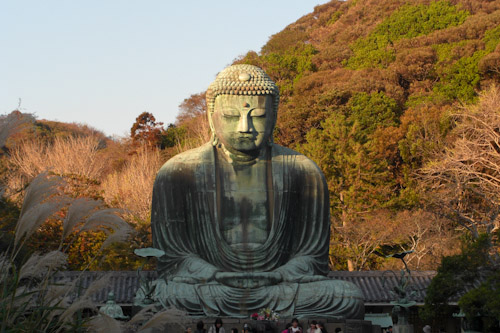
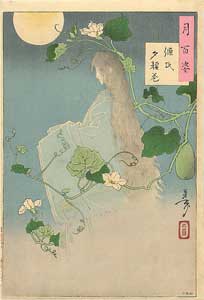
The Japanese folklore knows many distinct types of ghosts. I remember a language class where we spent more than an hour to distinguish obake (お化け) and yurei (幽霊). In a nutshell, obake are said to be local nasty noisy creatures which are able to perform temporary transformations, something like a poltergeist. The yurei, in contrast, is not fixed to a specific location, but often personally related to some human being, your personal ghost so to say.

Although my childhood days with being scared of ghosts and monsters under the bed are long gone, I like the concept of obake and yurei, especially when transferred into our everyday life experience:

yurei

yurei

The obake are the conditions (and people) I encounter at certain places, they usually make my life a bit harder. The noisy neighbour, people around a seminar house who do not respect our room and practice, the local baker shop who always sold out my favourite croissant at any time of the day.

The yurei are my very personal demons, I take them with me wherever I go. My aversion against noisy dogs and neighbours, my fantasy about how exactly everyone around me should behave, my craving for certain things and conditions.

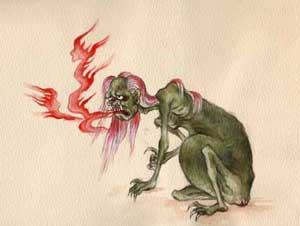
Just imagine what happens when my private yurei meet some local obake, we are well on the way towards quarrel, fight and disaster! In the worst case, if my emotional life mainly consists of walking my yurei to engage with some really nasty obake, I might turn into a ghost myself: a gaki (餓鬼) or “hungry ghost”.

gaki

gaki

Sitting at a table laid with delicious meals, yet with a throat too thin to swallow enough to fill my big empty stomach and my arms so long that I can reach everything I am craving for, but too long to feed my mouth. A never ending emotional struggle and starvation, neither pleasant for me nor for those around me.

In Zen practice, I find compassion is the most important and most difficult thing to learn. Surrounded by gaki, thetypical inhabitants of our modern consume-based society, I meet and get to know my yurei when sitting on my cushion. Knowing them well helps me to enjoy a happier life with an obake next door, and eventually I even have some food left for the gaki.

Zazen – Cheap and Easy!

Maybe your New Year’s resolution was to do something good for yourself, something from which also your family, friends and colleagues might benefit – you decided to give it a try on meditation?

Very good! Let me recommend how to save some money (you can donate for charity, if you are in a spending mood): try Zazen, it is cheap and easy!

A few weeks ago I saw a film which made me think. A world-wide institution (apparently rather popular and quite wealthy) was presented, which offers introduction to meditation: seven hours for about 1200.- Euro. Higher levels and ranks can be acquired, but it might cost you (up to) a few million …

me, a bit younger

me, a bit younger

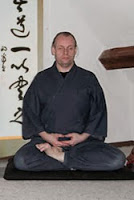
I do agree, the basics of sitting meditation (Zazen) can be learned quickly, actually in much less than seven hours. Continuing this praxis is easier after joining a group and finding a good teacher … you might be asked to contribute to the group’s rent for a room, and maybe your teacher’s expenses. Unless you are without a regular income, the required sum will not be a notable fraction of your monthly spendings … so let me recommend to save your 1200.- and look for a friendly Zazen group with a good teacher nearby, you’ll be surprised how cheap a change of your life actually can be!

Don’t let you discourage from dramatic stories about Japanese Zen monks’ education. These professionals go through (more or less) considerable hardship and pain, much of it designed specifically for young Japanese men who will later take over their father’s temple … most likely not what you are up for!

And don’t be bedazzled by a shiny spiritual leader (or the Zen-specific black robed grim ascetic master look-alike). What shines on the surface (and may it be a shaved head) might lack content, a teacher who fulfils the neophyte’s prejudice about how a real master should look like, talk and behave, is more likely than not a fake. Trust your intuition and life experience to check out carefully if what is being offered is actually doing good for you!

Two films I highly recommend to watch: the one about the aforementioned institution, and one about a fake guru: David Wants to fly and Kumare. And just in case you want to see a real Zen teacher in action, have a look at the short video about my former teacher I made a few years ago (this one is available for free on youtube).

Have a Coup of Tea!

KISSAKO "have some tea"

KISSAKO
“have some tea”

When I was a young Aikido teacher, we were running four beginner’s classes each year at my Dojo. The first day of a new class always was particularly interesting:

Some of the new students were shy and seemed to prefer hiding in a corner, nervous of what might be expected from them and anxious to do nothing “wrong”.
Others wanted to make clear to everyone their martial arts background by performing kata or exercises on the tatami before the class started, wearing colourful belts reflecting prior grades in Judo or Karate.
The intellectual sort gave uninvited lectures about the philosophical background of Aikido to interested listeners even before setting a foot on the tatami for the first time in their life.
And my more advanced students (including last quarter’s beginners) tried hard to make sure not to be mixed up with the newcomers … everyone was busy to be seen and recognized by the others and by the teacher.

After class, all of us sweating together for 90 minutes, joined for a coup of tea. By then, usually everyone was happy and relaxed, no sign of tension, no more insecurity and no more showing off. We all shared the same tea, sitting on the same floor, and it did not matter any longer who brought which package of wisdom or insecurity into the Dojo.

 Once two monks visited Joshu, the famous Zen master. He asked them both:
“Have you ever been here before?”
One monk said “yes”. Joshu said,
“Have some tea.”
The other monk answered “no”. Joshu said,
“Have some tea.”
Joshu’s attendant monk wondered about his master’s answer and asked him,
“Why do you say, ‘Have some tea’ to a spiritually advanced monk and then
say, ‘Have some tea’, to a monk who has still no understanding?” Joshu replies,
“Have some tea!”

Advanced student, experienced guest or beginner … please all enjoy a coup of tea!

What the Buddha said (or maybe not)

Actually, I don’t care much. Who knows what he really said, the oldest written records still existing today were compiled hundreds of years after he passed away. Most likely, even calling him “Buddha” is a much later invention… said that, exploring ideas and ways of thinking can be a joyful activity, and the ideas of someone we still talk about 2500 years after he lived his life might well be interesting.

From a Zen point of view it should be noted that we must not put too much hope and expectations into such an endeavour: when I have a problem (or I am my problem), and someone explains it to me and tells me it can be understood and there is a cure and how the cure looks like and I listen and understand and nod my head … the problem is still there. It does not simply vanish by understanding, by reasoning … I cannot think essential problems away like I solve a mathematical question. All the words and thinking (of course including these words) can only point to a certain praxis, a way of living, by this making our thoughts and problems superfluous once we become familiar with the praxis. If we stick to words of wisdom, if we collect ways of thinking like books in a shelf and use them as tools for arguing this or that way, we miss the essential point.

O.k., after this note of warning, let me point you to the lectures and writings of a former monk and Buddhist scholar, who is kind enough to share his insights and enormous wisdom (and never forgets to remember the delighted listener or reader of the importance of practise), John Peacock.

A good starting point might be his six talks available via the webpage of the Insight Meditation Center:

Buddhism Before the Theravada

which are continued by:

The Buddha’s Teaching on Loving-Kindness: A Mature Path to Awakening

If you prefer reading, these two articles by John Peacock published via the Barre Centre for Buddhist Studies are an excellent primer:

Mindfulness & the Cognitive Process, Part I

Mindfulness & the Cognitive Process, Part II

During our Sesshin we recite the Hannya Shingyo (Heart Sutra), and I often interpret a few essential lines during the Dharma talks. Usually, I introduce this by pointing out that it is a mission impossible to give a detailed explanation of the short text, line by line, in just thirty minutes. A series of 16 talks (a bit more than six hours) by John Peacock concerning the Heart Sutra can be found here:

The Heart Sutra – John Peacock – Dharmagiri S.Africa 2011

It took me three days to go through all the material listed above just once, though maybe even a couple of months might well not be sufficient time to read and listen thoroughly … so I hope these links won’t distract you too much from your practise, but instead serve as an inspiration and motivation to continue!

Raku Zen – 楽禅

During my last Sesshin one student asked me “which branch of Zen” I am teaching. She heard about Rinzai, Soto and Sanbo Kyodan and could not quite summarise what we have been doing under one of these. I replied we are practising Rinzai Zen minus Koan practice plus Hitsuzendo (Zen Calligraphy) plus Aikiken (Aikido Sword), without too many rules and too strict schedule but with lots of voluntary extra work for advanced students. A pretty long answer for a short question …

Another student asked me a day later if I won’t consider teaching Zen professionally, implying I had to shave my head, take the percepts and become a monk. I replied that we are all professional human beings and when our Zen-Practice is deeply influencing our life, we are 24 hours Zen professionals. Being an ordained monk or not has severe implications only in a culture where this profession comes along with certain duties and privileges, most of all enjoying the luxury of intense practise and access to Dharma-teaching, and the permission to collect donations as a base for living. I doubt the necessity to introduce Buddhist Monastic life in our Western culture (I even believe it is a dangerous idea, spoiling serious practitioners’ ego, but this is another story …).

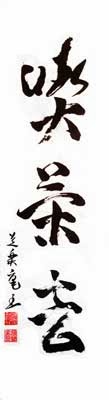
After crossing the boarders of traditional branches of Zen and transcending any discrimination between lay people and professional monastics, I believe it is a good idea to give the Way of Zen I am living and teaching a distinct name. I like to call it 楽禅 (Raku Zen), where 楽 (raku) stands for joy, effortlessness, but also for the intense practice coming along with or preceding it (ask any skilled musician, calligrapher, martial artist or craftsman how they managed to master their art).

RAKU

RAKU

Looking at the etymology of the 楽 character, it is said to be derived from the pictogram representing a person dancing with chimes in both hands, according to some source (1) maybe a priest or shaman performing a kind of healing ceremony. I like this character, since it both reflects joy and easiness, but also serious activity beyond rational explanation.

Today it is December 8th, an auspicious day for Zen-Buddhist practitioners (at least according to the Gregorian calendar). A good day to re-consider one’s practise and teaching, I will call mine Raku Zen (楽禅) from now on – feel invited to join!

(1)「もとの字は樂に作り、柄のある手鈴の形。白の部分が鈴、その左右の幺は糸飾り。もと舞楽のときにこれを振って神を楽しませるように使用した。また病気のとき、シャーマン(神がかりの状態となって予言や病気を治すことなどを行う巫女)がこれを振って病魔を祓ったので、病気を治すことをりょうという。療はのちに作られた形声の字である。」

常用字解 by 白川 静 (Shirukawa Shizuka) published by 平凡社

Too long, too short, just right …

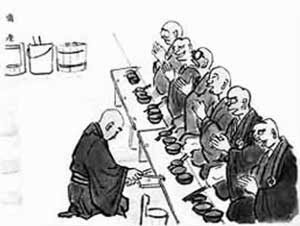
eating After the end of session one student complained that time for finishing her meal was always too short and she felt stressed eating in a hurry. Another student complained he has to wait so long after eating until everyone else finished and he can leave the dining hall. The third student said the time was just right for him to finish his meal in his usual speed. All three did not yet understand what it means to share a meal … like little children we want all things go our way, or we feel uncomfortable.

During a Sesshin we practice together for many hours a day, not just for ourselves the 20+ minutes periods on our cushion. Of course things don’t always go my way during this time, even when leading the Sesshin … I cannot select my students, whoever registers is welcome. I cannot select the room either, the administration of the seminar house plans where my seminar will take place. And I have to handle any kind of incidents … students leaving, students oversleeping and even craftsmen coming to fix a water leaking problem from the upper floor, suddenly making our preparation room unavailable while producing lots of noise and dirt.

Like the stones in a river-bed we rumble and tumble with and against each other, and this process of social learning in a special atmosphere, protected by some rules and a tight schedule, is an important part of the Zen-training. In Japanese it is called  切磋琢磨 (sessa takuma), the Chinese characters evoking exactly the image of polishing stones by continuous interaction. Things are never exactly going my way. They go some way, maybe our way, yet after sufficient Zen-training I am totally free to merge in. My big ego, My Way of conducting every day life does not hinder me any more. Getting up early? Fine! Sleeping long hours? Fine! Eating fast? Fine! Eating slow? Fine! A cosy and warm room for Zazen? Fine! No heating in the Japanese temple? Fine! … life can be so easy, even with other people around and some rules to follow, but in the beginning of our Zen training the whole world seems to carry out a plot against me. A very childish attitude, isn’t it? Let’s grow up!

Zen in the West

Possibly my understanding of Japanese Zen is not sufficient to allow commenting on something which on the outside very much looks like a family-owned business of funeral parlours with associated boot-camp and a few beautiful sightseeing spots.

But I have been long enough involved in “Western Zen” to observe my patience wearing thin. I wrote up a few questions, not even 95, and lacking a Zen-Temple’s door nearby to post them, I will just post them in my blog:

  • Where is the truly homeless Zen-Monk, living in celibacy, having nothing more than a bowl and his robes made out of ragged cloth?
  • When and where do the Master and the Beginner’s Mind meet as true human beings without rank (一無位真人)?
  • How many are known to have received and passed on the Dharma and yet behaved like
    criminals?
  • Which honest follower of the Zen Way abides with his Master, in spite of all his proven misconducts and crimes, striving not to put at risk the own Zen-career instead of standing by the side of his fallen teacher’s victims?
  • Who pretends to hold ranks and titles authorised by this and that Masteror tradition, charges high fees from his students while it is all too easy to find out this is altogether fake and self-deceiving illusion?
  • Who proudly boasts to be a Zen-Monk or Zen-Nun, dressed up in fancy robes from time to time, but usually just lives an ordinary lay person’s life with job and family, savings-account, insurance and pension-scheme, re-interpreting the once publicly received percepts into quite something else?
  • Who got lost in endless rituals and routines year after year in the Temple or Dojo and became nothing but a 僧堂バカ (sodo baka), a “practice hall blockhead”, yet willing to advice other people who take responsibility for a family and society?

And all those Buddhists who now quickly point with their finger on Zen-Buddhism derived from a Japanese origin, I ask:

  • Who flies far by plane to take the holy vows and already plans to keep them just for the time being, while living from the poor hard-working peasants donations – and yet calls himself the only true Buddhist Monk?

There is not so much anger in my questions as it may sound. I feel more sad, since I truly believe in the Way of Zen and yet find all wide open doors leading into a maze of darkness. A week or so ago I wrote:

It is up to us now. In the face of all these victims, we deserve a true Zen revolution, at least!

More than ever I believe this is true. We have to re-invent Zen from scratch, and that might be by going our own true way of life and practice.

Just normal …

Maybe I recently read too much about abusive Japanese Zen Masters living in the West, causing severe harm to their (female) students, their Sangha and the development of Zen outside Japan. Maybe I recently read too much about Western Zen adepts pretending to be fully acknowledged Zen Masters (Roshi) in this or that Japanese tradition, and by and by it turns out they never got any of the titles they claimed, leaving behind desperate students who dedicated a lot of life-time (and money) working with and for their fraudulent want-to-be master. One “Zen Master” (who carefully avoids any hint to his lineage on his numerous web-pages) even boasts one Prof.h.c. and two Dr.h.c. titles you can buy here.

Very well I remember when my former teacher once was asked to translate what his owner supposed to be a “Zen Master’s Certificate” … just a monk’s name written, no master’s title. Proud owner will be enlightened to find out … he said with a smile. Though later friends told me, the mistaken master boldly showed off with a gold-brocade robe and his keisaku skills during a following sesshin.

I’m just so much fed up with all this!!

What is Zen? What is our Zen-praxis? Why and how and with whom do we study?

Not being affiliated with any of these “real” but evil Masters, not claiming any nebulous authority but my former teacher’s allowance to teach what I have learned from him, I am increasingly worried to be lumped together with those people. “You are Zen teacher? Well, I heard about these …!” It feels a bit the same as holding a “real” PhD gained after years of hard-working research, in the face of all the c&p thesis coming to light recently. You feel tempted to hide your qualifications, just to avoid being associated with those who boast with what they never mastered.

Said that, more worried I am about potential students. I well remember my time as a searching and clueless beginner. I hoped to find a “real good” teacher, but how to judge? That ranks, titles and coloured robes are the worst indicator for real qualification I did not know, and was just lucky not to get caught in the trap. Actually, I must admit I initially mistrusted all of my teachers, just because they were lacking of what I considered to be the necessary symbols of a Real Master.

My first encounter with the fabulous Hirokazu Kobayashi, my late Aikido teacher, was seeing an old man with slightly messy hair wearing a yellow t-shirt and carrying four plastic bags in his hands entering our changing room to put on dogi and hakama in the middle of his students. Can he really do Aikido? I wondered …

My Zen-teacher I mistook for a tacky monk’s statue somebody put in the Zendo next to the altar. I was not lightly shocked when the statue suddenly smiled upon my close inspection. Does a real Zen Master just look like that? I wondered …

The Shakuhachi sounded awful, and it seemed much too big for that little old man who sometimes seemed to produce more wind than music. It was so different from any Shakuhachi-CDs I loved to listen … Is that real Shakuhachi? I wondered …

Glad I mistook the old man in working-clothes riding his bicycle up to the temple I visited for Zen praxis not for one of the local farmers, since he was the Roshi … a real one by the way, and not at all evil as far as I know. He appears “just normal” … even when playing with a ball in the Zendo.

Though I fear it might not attract sufficient students to survive and pay the rent, I believe being just normal is the best a Zen-teacher can do. How’s your teacher?Well, nothing special, I guess he is just normal …

Two (in)famous Roshi

shimano Some time ago I wrote about “Abuse and Zen” in this blog, referring to the case of Eido Tai Shimano Roshi, a prominent Zen Master teaching in the U.S. After decades of struggle and allegations of sexual misconduct, the “Zen Studies Society” eventually parted from their former Abbot in December 2010.

Recently I read that Eido Shimano and his wife are suing Zen Studies Society for damages in excess of $2 million USD because of not having received any retirement payment. Furthermore, the couple wishes to regain what is described in the court document as “as significant collection of spiritual and artistic items”. A married Roshi abuses female students and later sues the community which over decades covered up his misconduct for a pension? In addition, the man who is supposed to own nothing more than a bowl and three robes wants to have back his precious art collection …

A single case?

sasaki

Read here a recent Daily Mail article about Joshu Sasaki Roshi, another Japanese Zen Master teaching in the U.S. since the early 60ies and maybe known as the Zen teacher of Leonard Cohen. Joshu Sasaki “has allegedly groped and sexually harassed women across the U.S. for over 50 years.”. The article states “accusations
have been circulating since the early 70s”, but the Zen community covered up. A New York Times article is quoting victims who confronted the community and Mr Sasaki concerning his misconduct received no support and were driven out. The whole case did not become public until this article was psoted in sweepingzen.com in November 2012.

More than a century ago Japanese Zen started to root in the U.S., though in the light of these severe cases of misconduct of two most prominent Masters and their large communities covering up, what remains? I feel sorry for the victims, the direct ones suffering abuse, and those Zen students who eventually have to realise the true character of their seniors and teachers. I feel sorry for the two old men who destroyed their work of a lifetime, and probably the whole of Rinzai Zen in the U.S.

I strongly believe that in the 21st century in the West we deserve a different, a new way of studying and practising Zen. One, which is not rooted in overcome monastic traditions of a lifelong dependency on old men regardless of their misconduct, but one where we can meet with the true Old Masters of the past on eye level while we sit on our pillows, or whatever we do all day long.

It is up to us now. In the face of all these victims, we deserve a true Zen revolution, at least!

The Sword that Saved Edo

Occasionally I enjoy watching Jidaigeki, Japanese period dramas with a few brave Samurai saving many good ones (usually the poor and hard working) against certain bad ones (typically wealthy and completely irresponsible and ignorant leaders or bandits) by incredible skill and acts of bravery, often while ignoring their superiors’ orders. I feel less guilty watching such nonsense after I recently read the late Ueashiba Morihei, founder of Aikido, also liked Jidaigeki … though I must admit this sounds a bit like Picasso loved painting by numbers.

A few weeks ago the man who saved Tokyo died from esophageal cancer: the engineer Yoshida Masao, who was leading with a handful others the fight against the Fukushima nuclear disaster. His decision to pump seawater for cooling into the run-away reactors most likely stopped the cores from exploding and prevented Tokyo from becoming a deserted no-man’s land … well against the orders of the TEPCO management, who threatened to penalize Yoshida, because they feared the sea-water might corrode the expensive equipment.

How would Yoshida feel about the ongoing disaster with high amounts of radioactive water leaking from the storage tanks due to most careless negligance, if he was still alive? Building water-proof tanks is not rocket-science, but it costs some money. Is it surprising re-used tanks might leak after re-assembling? Let alone the groundwater issue, which two and a half years after the disaster the Japanese government tries to fix with a $500 project (which is roughly 1/3 of TEPCO’s profit in the year before the earthquake). “These actions indicate that you don’t know what you are doing, you do not have a plan and that you are not doing all you can to protect the environment and the people” TEPCO’s external expert Dale Klein, the former head of the US Nuclear Regulatory Commission concluded.

I wonder if, in case Japan early enough decides to invest sufficient money to really resolve the Fukushima radiation catastrophe, future Jidaigeki will tell stories of a brave engineer who saved Tokyo against ruthless managers interested in nothing but their assets.

By the way, “The Sword that Saved Edo” is really not worth watching …

fukushimaP.S.: while editing this post, Tokyo won the bid for the 2020 Olympics … so maybe the whole situation is now, in spite of all scientific evidence, quite opposite? Tsunekazu Takeda, president of the Japanese Olympic Committee said, that “not one person in Tokyo has been affected by this issue, Tokyo and Fukushima are almost 250 kilometers apart. We are quite remote from Fukushima” and in the words of Prime Minister Abe “It has never done and will never do any damage to Tokyo. There are no health-related problems until now, and nor will there be in the future.”

P.P.S.: … just in case one hopes spreading of radioactive material is a local problem, unfortunately it is not: “Tons of cesium-tainted wood chips found near Japan’s biggest lake”. This lake is far from Fukushima, but close to Kyoto.