Raking the Zen Garden (Day 3 – 28. March)

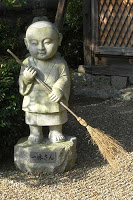
gardenToday the Roshi asked us to come to his temple once more. When we arrived, he was just about cleaning the rock garden (karesansui) in front of the main entrance. We helped to pick up the fallen leafs for half an hour, then he started raking a wave-pattern into the gravel.

Afterwards it was K-san’s turn with the rake, and the Roshi corrected his action with much enthusiasm and accompanying sounds. From watching K-san, I figured that raking a proper pattern into the gravel is much more difficult and physically demanding than I ever thought. Then the Roshi called me to give it a try, and I had to produce a curved line around some rocks, carefully, not to damage any of the moss.

I really liked it! Raking a Zen garden is much like Hitsuzendo, drawing a line with all your energy, concentration and breath.

Happy Birthday!

eastersToday is April 8th, Buddha’s birthday, according to the Japanese Buddhist calendar, and co-incidentally Easter Sunday. We will have a little ceremony at my Dojo, and enjoy eating chocolate eggs.

While I am still editing the notes I took at Tekishinjuku, I feel a bit sad that I was not able to stay in Japan until today. Not just I will miss the ceremonies at the temple; today also K-san will formally become a Monk and change his name.  The Roshi asked me to help K-san shave his head, but he decided to keep his hair as long time as possible … I wonder how he looks now?

What I took from Japan this time is the inspiration how to run a good Zen-Dojo, with hard practising but happy people. Maybe today is a good day to reconfirm my ideas and wishes to set up such a place, instead of longing to be in Japan?

Deserted

In May 2011, when I first wanted to visit the International Zen-Dojo, no one answered my mails. I concluded they possibly must all be too busy helping after the earthquake and tsunami, maybe all monks and residents gone to the north-east to provide their support. I even felt a bit guilty and selfish to plan a week or two doing Zazen, while in the Tohoku-region the dead are not yet buried. And in the end it was o.k., I went to Tokyo and Sendai, passing by Fukushima with it’s at this time still very unstable reactors, and visited friends and colleagues, instead of sitting on a pillow in the lovely safe countryside outside Kyoto.

Today the Roshi told me that everyone at Tekishinjuku quickly left Japan just days after the disaster happened, and the Dojo was deserted almost until last November, when K-san moved in to spend there the winter all alone. My apology that „we are always afraid“ seemed to have amused the Roshi a lot. I was not ironic when I said that, though I heard the Roshi still laughing when we left through the temple gate.

Probably I was the first person since March 2011 living in the Dojo’s guesthouse, and my task was also cleaning the room I staid, and the whole house and garden. So eventually I found one way, to hands-on help recovering from the after-effects of the disaster: preparing the Zendo for new international visitors to come.

Zazen with the Roshi

The afternoon of the second day we went down from our temple, the Jotokuji (常徳寺), to the Roshi’s Zendo at Tokoji Temple (東光寺) for doing Zazen. It felt kind of normal and kind of strange to walk through the village like in a formal monk’s procession, the three of us one after the other, our hands folded as during kinhin. But K-san joyfully greeted all people we met on our way, and their friendly reply gave me much comfort not performing too much as a „henna gaijin“ (weird foreigner).

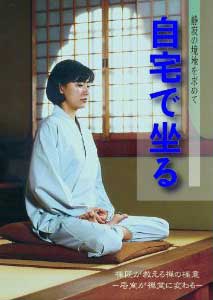
zendoThe Zendo of Tokoji is very nice, you can see it in a recently issued Japanese Zazen tutorial-DVD called “自宅で坐る”, made by the Roshi (one can buy at any Rinzai-Zen temple in Japan).

The three of us did a round of Zazen together with the Roshi, and then he gave us some explanation why in Zen it is so important to practise and not just to do theory: body and heart must act together, unified, and not be separated. For us, often the head and thinking is the most important thing, he said. But only when body and heart act together in the same direction, we are free. This “free” he illustrated with very vivid actions imitating a sword fighter defending against attackers from all sides …

Then we briefly talked about my former teacher, that he and the Roshi were both studying under Omori Sogen. The Roshi remembered meeting my former teacher in a bookshop in Kyoto, when we both visited the city in May 2009.

I can see lots of similarities between the Roshi and my former teacher, almost to the extend that I got the feeling to know the Roshi much longer than just a few days. Is it maybe Omori Sogen’s spirit, which I met through both of them?

Cooking and Eating all up

All food we eat, three meals a day, we cook ourselves. I love cooking, but it is also a challenge to cook Japanese food for Japanese … and how many people are joining our meals is not always clear (I maybe will write later about Roshi’s “special guests”). All things have to be ready in time, more or less, rice, vegetables and soup. And the pickled radish (takuan) to wipe the bowl.

farmerMost of the food are donations from the local farmers, and every other day the Roshi comes with one or two bags full of fresh vegetables or other things to eat, sometimes even sweets.

What we cook we must all eat up. If we cooked too much, the leftover breakfast is used for lunch, and the leftover lunch for dinner. No food is thrown away.

When I hear and see the farmers working on the fields around the temple, I really feel grateful and motivated to practice hard, because here I live on the outcome of their work.

Morning Sutra (Day 2 – 27. March)

The Roshi phoned the evening before, he will come for the morning ceremony (choka). We sat Zazen in the dark cold Dojo at 5 am, when I heard footsteps outside, and then a voice, a groaning, moaning, many kinds of deep and scary sounds. I imagined a dragon or some big ancient animal slowly coming into the Temple. And then, reflecting in the glass of the window, I saw Roshi slowly passing behind us. A really impressive figure, not just because of his monk’s robes and shaved head.

The morning service took almost one hour, chanting many Sutras, followed by a very powerful breathing exercise the Roshi created, which clearly reflects his background in martial arts, Kinhin and Zazen.

Somehow, we thought later, the way Roshi entered the Dojo evokes a bit the image of a big old turtle coming from the ocean onto she shore. Well, he loves and collects turtles made from stone, as I could find out later when we visited his other temple.

Zen Fridge (Day 1 – 26. March)

Old Japanese houses look so lovely on a picture. What one usually does not see is how cold they are in winter! Getting off the train at Kameoka station, my first thought was „it is cold here“. In Tokyo I enjoyed walking in Ueno park late evening, but at the Tekishinjuku they even had snow this morning.

3°C at 8:17

3°C at 8:17

After arriving, I first did some basic cleaning of my room in the Temple’s guest house. The house has been deserted since May last year, and was covered everywhere inside by a layer of dust and occasionally dead insects. Then I went down to the Temple for evening Sutra chanting, dinner and two rounds Zazen and final Sutra, all in the unheated Dojo.

The icy feeling while sitting on my pillow already warned me to put on all the cloth I brought with me for sleeping, including two pullovers, two samue and my winter coat, and I wrapped myself into three futon, but still shivered all night through. The thermometer was below zero when half frozen I went down to the Temple again at 4:45 the next morning, for Sutra chanting and Zazen. I very much enjoyed seeing the morning sun coming slowly through the fog!

When I came back to the house after Zazen and Nittensoji (morning cleaning) a quarter past eight, it already “warmed up” to 3 degrees … and I borrowed two more pullovers, jogging pants and a pair of warm socks from the Dojo for the nights to come. Living in an old Japanese house near Kyoto end of March is very much like winter camping …

Every Day a Good Day

I am just back from one week stay at the Tekishinjuku (International Zen Center Kyoto), on the countryside near Kameoka. I really enjoyed my time with the nice people I met there, and I learned a lot. What I experienced at Tekishinjuku was a way of living day by day, which was simple and just good. It was hard for me to say good bye this afternoon, and I felt very sad all the way back to Kyoto.

jotokujiWhen I have some time during the next days or weeks, I will edit a few notes I took during my stay. Somehow I think it is too much, maybe enough for a book. And somehow I don’t want to put into words and publish what we shared during these seven days. You must come and find out yourself!

But I believe it will help this lovely place for experiencing Zen, if it becomes a bit more public how the day to day life at Tekishinjuku looks like. The Dojo is just recovering from the after-effect of the great disaster last year, when all international guests and resident monks left in the face of the collapsing reactors near Fukushima. I am very happy I could contribute a little bit to its revivification, though for a far too short time.

I take it as a good sign that my zoori (slippers) did not fit into my luggage when I packed, so I had to leave them behind, hopefully for my next stay.

What can we do ?

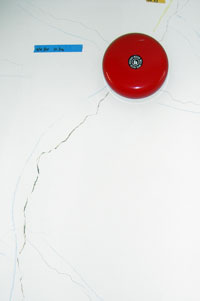
crackBack to Sendai (in the north-east of Japan), the last year’s earthquake and tsunami are much closer, emotionally and physically. One can see cracks and damages all over inside the building, and we started our scientific conference with a minute of silence for those passed away.

What can we do, when our “money donation” reflex in the face of a disaster is not really adequate, and foreign hands-on help not possible or even welcome?

The best and maybe only thing we can actually do is to come and be here in person. After the dead are buried and basic supply for the living is restored, most important is finding back to a day to day life. Let aside the economic basis of a once popular tourist resort, the feeling of being deserted or forgotten after traumatic experiences must be horrible, and similar the feeling of being nothing more than a helpless victim.

I am glad the organisers eventually decided not to relocate the conference, but allowed us to come to Sendai and share some time working and enjoying warm hospitality together with our Japanese colleagues, while not forgetting what has happened and is still going on.

Callligraphy and Supercomputing

Today we visited the “K-Computer” in Kobe, which currently is the fastest supercomputer worldwide. Since this blog is not about computer science, I spare all the fascinating technical details, and want to just mention the link Japan created between supercomputing and calligraphy.

The Japanese character-“logo” (京) for the K-Computer was written with brush and ink by a famous artist, and my Japanese colleagues told me it cost a fortune (which in their eyes should have better been invested in technology).

Instead of posting this piece of art, let me share just some creative interpretations of the character by school kids, exhibited in the lobby of the building:

Ks

Somehow it is nice to see the ancient art and modern technology side by side, although I’d preferred to chose the logo from the above samples, and spend the money for teaching young kids calligraphy and computer science.